Concrete vs. Asphalt Driveways: Which Is Better for Indiana Homes?
Replacing an old driveway or installing one at a new home? Concrete and asphalt are two popular options, but the difference goes beyond appearance and upfront cost. Here’s what Central Indiana homeowners should consider before deciding which material is the better investment.
Concrete Planning Starts With More Than a Pour Date
It is easy to think of concrete work primarily in terms of the day the trucks arrive, but successful concrete work begins much earlier.
Depending on the project, preparation may involve:
- Demolition and removal of existing material
- Excavation and grading
- Establishing elevations
- Drainage considerations
- Base preparation and compaction
- Forming and reinforcement
- Equipment and truck access
- Coordination with structures, utilities, landscaping, or other trades
Understanding those requirements early helps establish a more realistic scope and construction timeline.
This becomes especially important when concrete is one piece of a larger project. If grading, utilities, foundations, framing, landscaping, or other trades are involved, sequencing matters.
Anhalt provides both concrete and site preparation and restoration services, giving our team the ability to look at what needs to happen before, during, and after the concrete portion of a project.
Concrete or Asphalt? The Right Driveway Depends on More Than Price
If you’ve started looking into replacing your driveway, you’ve probably noticed that concrete and asphalt are two of the most common choices. Both can provide a dependable surface for parking vehicles and accessing your property, but they differ in cost, maintenance, appearance, and long-term performance.
For homeowners throughout Central Indiana, there’s another factor worth considering: our weather.
Between freezing winter temperatures, summer heat, heavy rainfall, and repeated freeze-thaw cycles, Indiana driveways experience their fair share of wear and tear. Choosing the right material is important, but so is making sure the driveway is properly installed from the ground up.
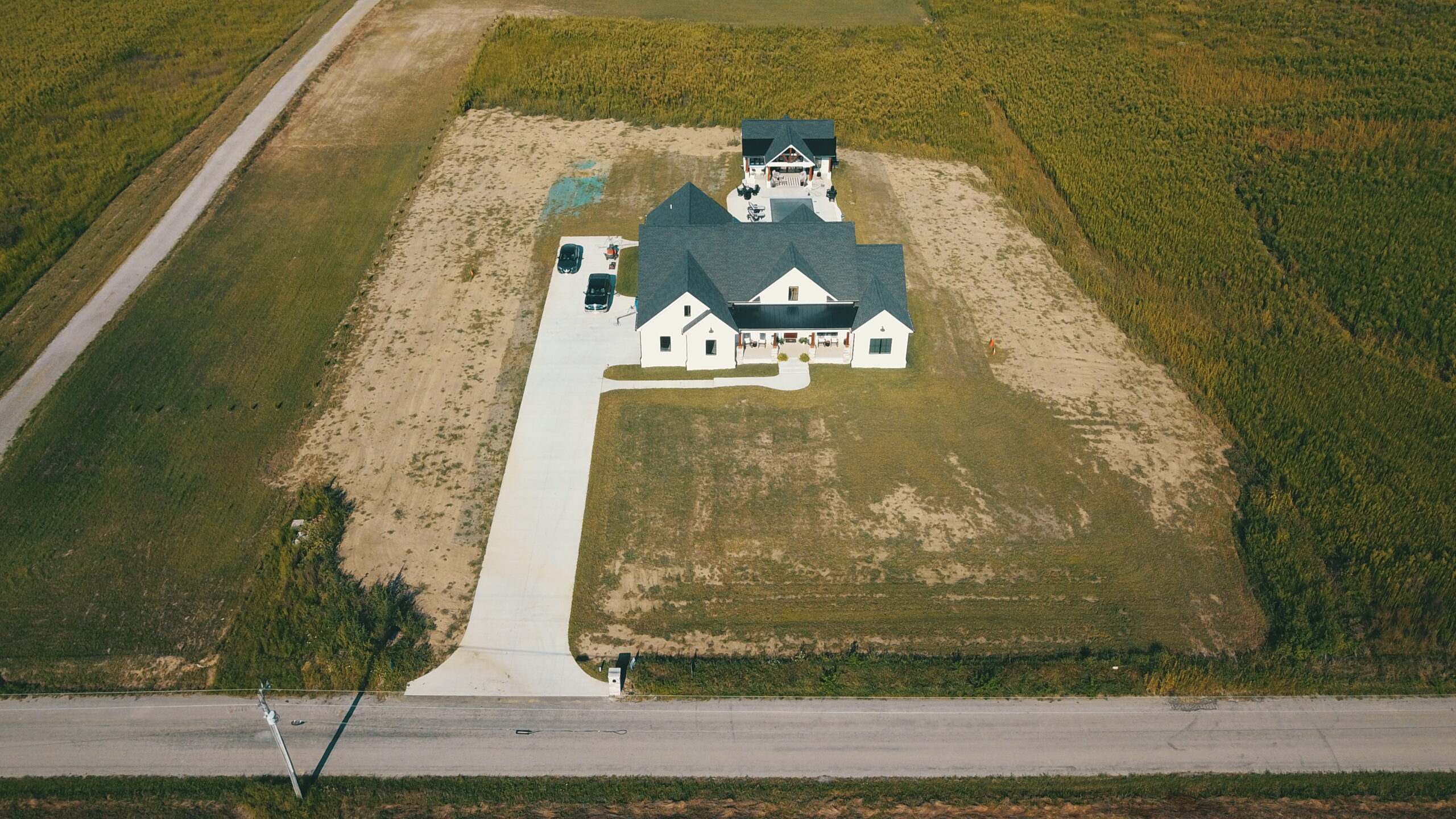
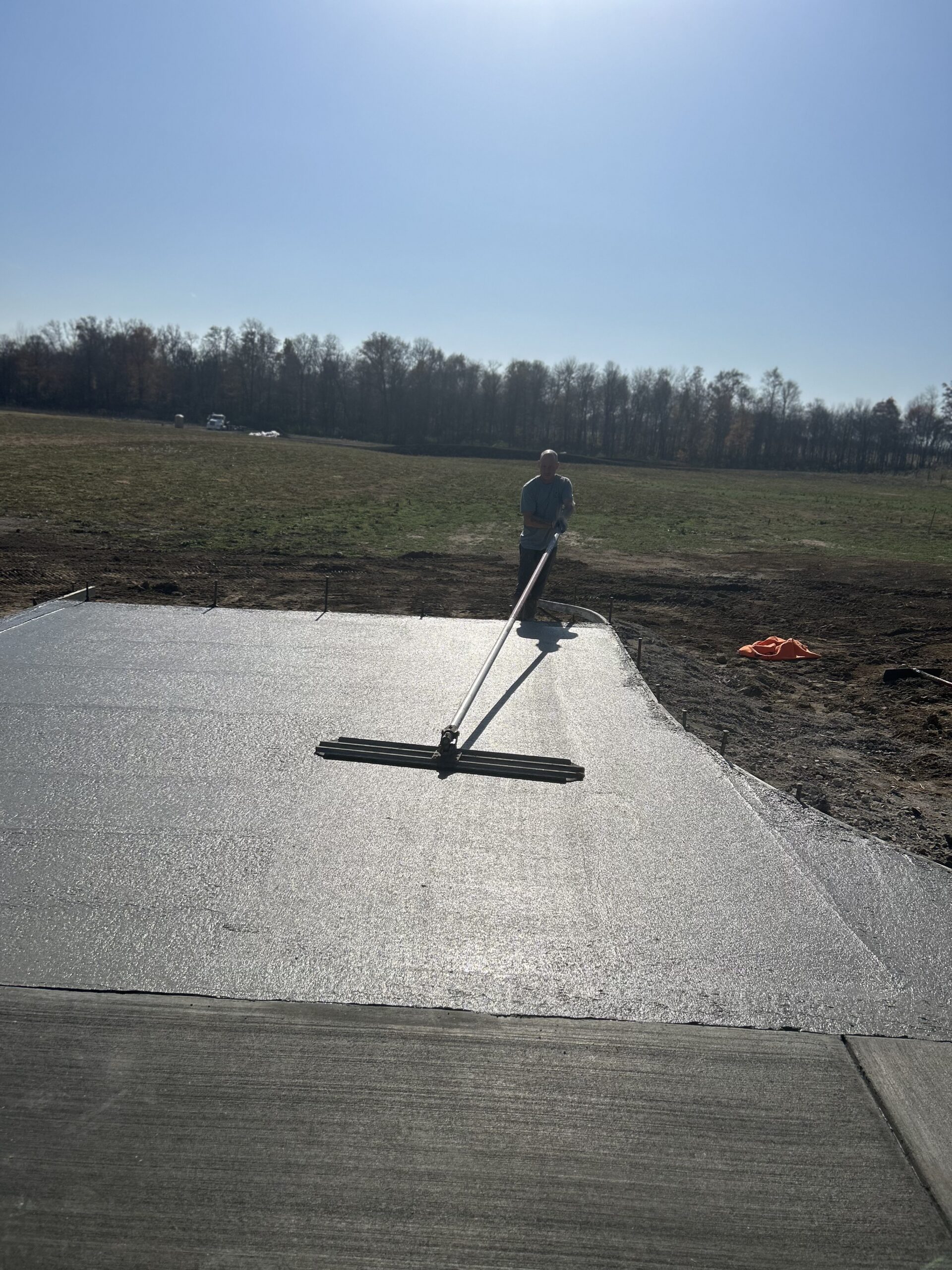
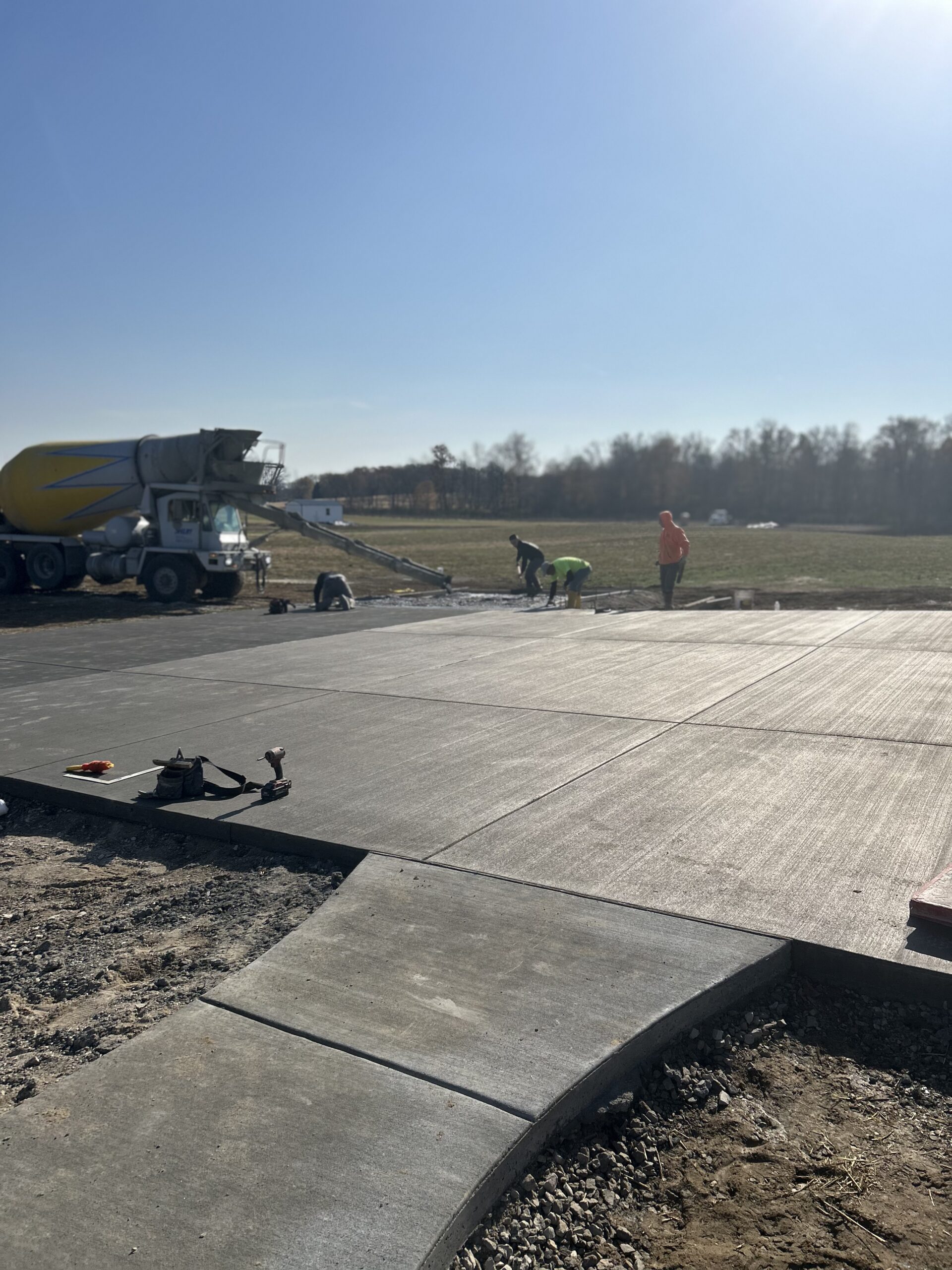
At Anhalt Concrete, we specialize in residential and commercial concrete installation throughout Indiana. We also handle the excavation, site preparation, and final grading involved in our concrete projects, giving homeowners one crew to work with from the beginning of the job through completion.
Before deciding between concrete and asphalt, here’s what you should know about how each material performs.


Is a Concrete Driveway More Expensive Than Asphalt?
For most homeowners, cost is one of the first considerations when choosing a driveway material.
Asphalt generally costs less to install upfront than concrete. The materials and installation process can make asphalt an attractive option for homeowners working with a smaller initial budget, particularly on longer driveways or properties with substantial square footage.
Concrete typically requires a larger initial investment. However, the upfront price doesn’t tell the entire story.
A properly installed concrete driveway can provide decades of service with relatively little routine maintenance. Asphalt can also last for many years, but it generally requires more frequent attention to preserve the surface and address deterioration.
When comparing estimates, homeowners should consider the total cost of ownership rather than focusing exclusively on installation.
A lower initial price may be appealing, but maintenance expenses, repairs, and eventual replacement should all factor into the decision.
It’s also important to understand exactly what’s included in an estimate. Removing an existing driveway, excavating unsuitable material, preparing the base, addressing drainage, and completing the surrounding grading can all affect the final cost.
Two driveway estimates may look similar on paper while including very different amounts of work.
For homeowners considering a new concrete driveway in Central Indiana, requesting an estimate based on the property’s actual conditions is the best way to understand the investment.
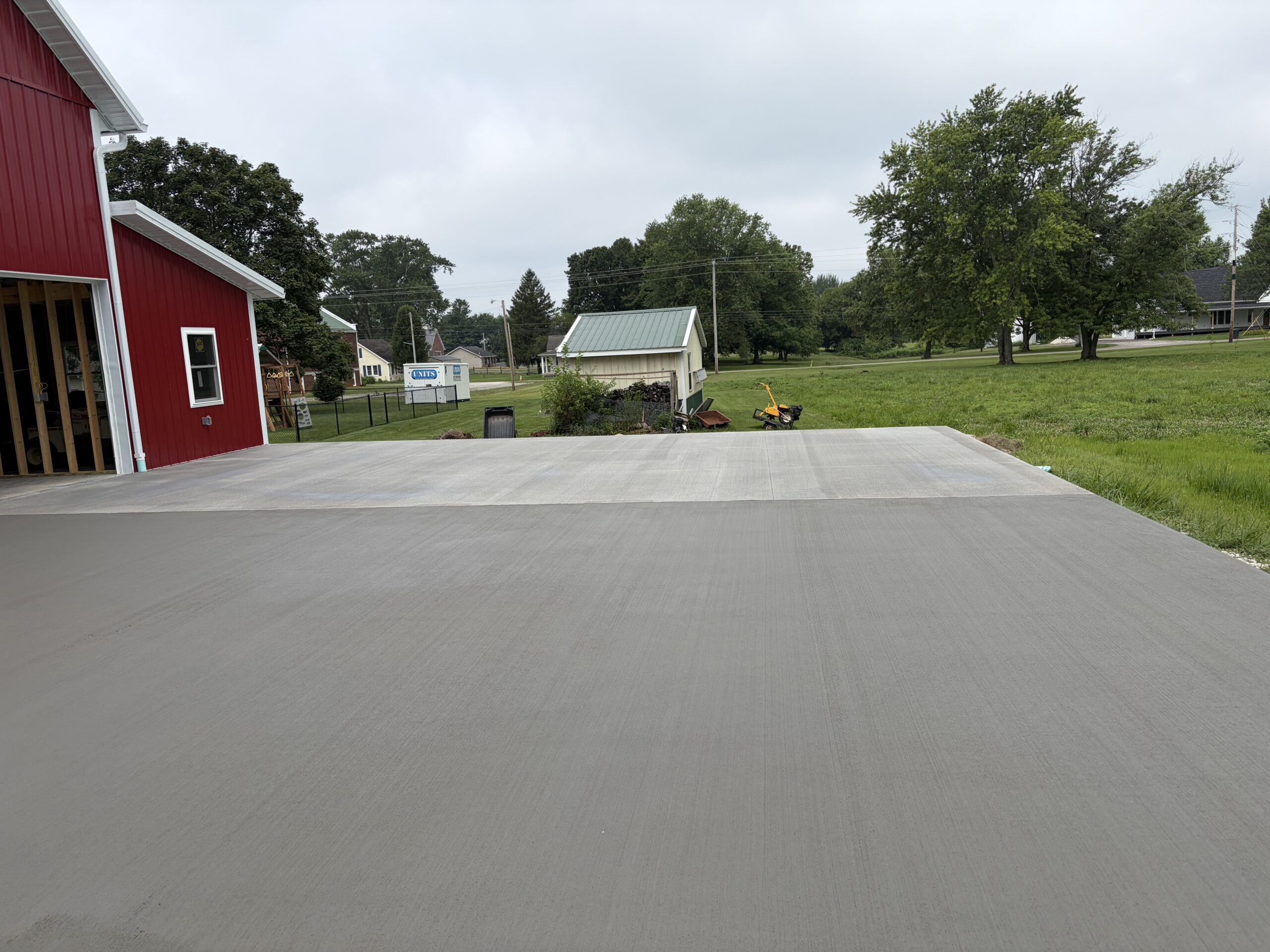
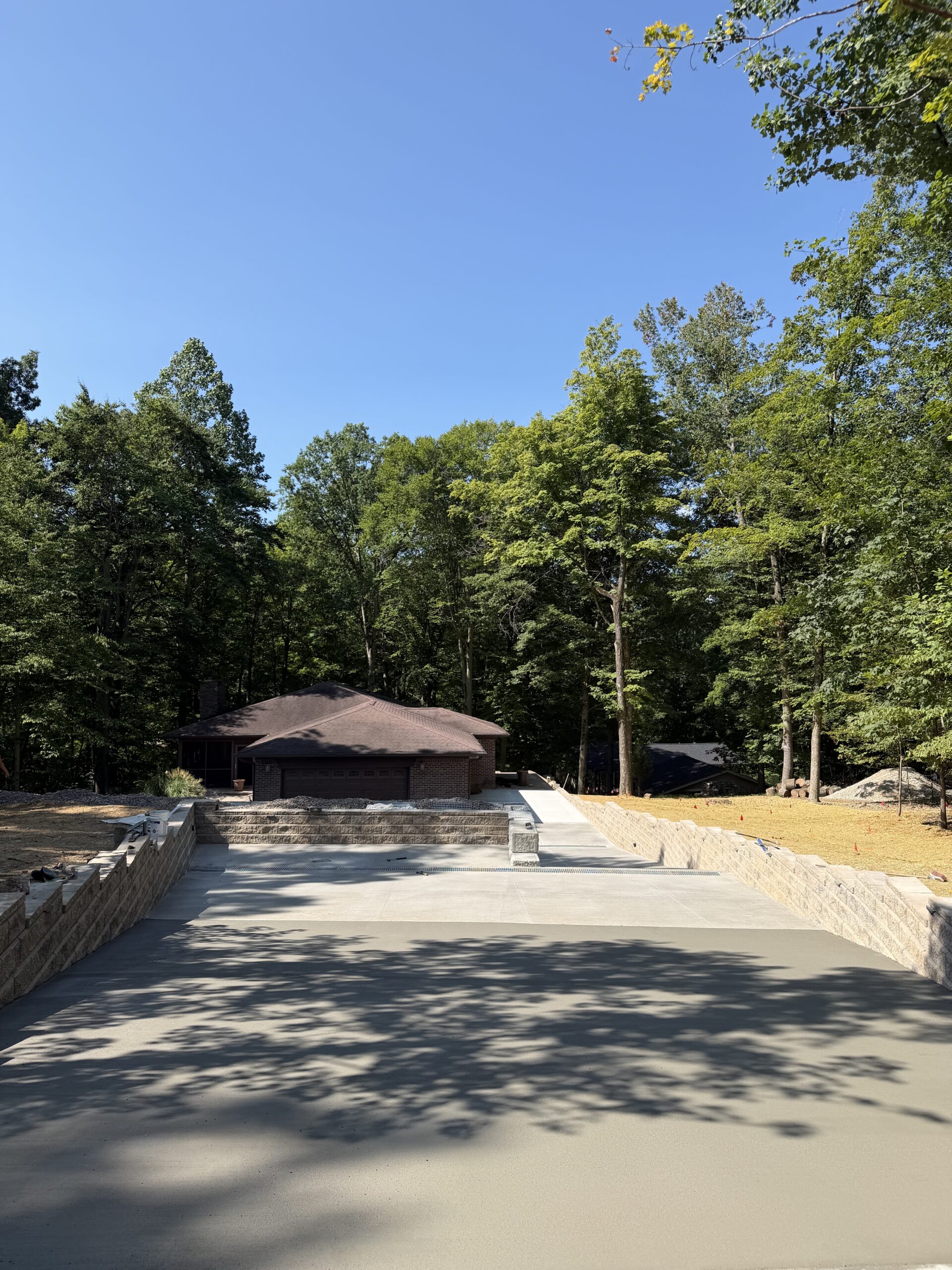
Which Driveway Material Holds Up Better to Indiana Weather?
Anyone who’s spent a few winters in Indiana knows our weather can change in a hurry. We might have several days of freezing temperatures followed by a warm afternoon, heavy rain, and another overnight freeze.
Those temperature changes can be hard on driveways, particularly when water finds its way into cracks or collects beneath the surface.
How Concrete Handles Indiana’s Freeze-Thaw Cycles
Concrete is a rigid material designed to provide a strong, durable surface. When properly installed with appropriate drainage, joints, and materials, it can perform well through Indiana’s changing seasons.
However, concrete isn’t completely resistant to cracking.
Water can enter existing cracks or vulnerable areas and expand when it freezes. Repeated freezing and thawing can contribute to surface deterioration, especially when the concrete has poor drainage, inadequate air entrainment, or other installation deficiencies.
That’s why proper installation matters.
A driveway needs more than a smooth finish. The ground underneath must be prepared to support the concrete, water needs somewhere to drain, and the installation must account for the conditions the driveway will experience throughout the year.
How Asphalt Responds to Temperature Changes
Asphalt is more flexible than concrete, which allows it to accommodate some movement associated with changing temperatures.
However, that flexibility comes with its own considerations.
During hot weather, asphalt can soften, making it more susceptible to deformation under concentrated or heavy loads. Over time, exposure to sunlight, moisture, and traffic can contribute to oxidation, cracking, and surface deterioration.
In winter, water entering cracks can freeze and expand, potentially worsening existing damage.
Neither material is maintenance-free, and neither is guaranteed to remain crack-free.
The important thing is choosing a material that fits your property and having it installed correctly.
For a more detailed explanation of how temperatures and ground conditions affect concrete, read our guide on pouring concrete in Indiana’s cooler weather.
How Long Does a Concrete Driveway Last Compared to Asphalt?
A driveway is a significant investment, and most homeowners want to know how long they can reasonably expect it to last.
Under suitable conditions, a properly installed and maintained concrete driveway can often last 30 years or longer. Asphalt driveways commonly have a shorter expected service life, often around 15 to 25 years, although actual performance varies considerably.
Those figures are general estimates rather than guarantees.
The lifespan of either material depends on several factors, including the quality of installation, soil conditions, drainage, vehicle traffic, weather exposure, and ongoing maintenance.
A concrete driveway installed over an unstable base may experience problems much sooner than expected. Likewise, an asphalt driveway that receives regular maintenance and is built on a properly prepared foundation may perform well for many years.
For homeowners planning to stay in their property long-term, concrete’s potential longevity can make the higher upfront investment worthwhile.
For someone primarily concerned with reducing immediate installation costs, asphalt may be a reasonable alternative.
The important thing is to consider how long you expect to use the driveway and what you’re willing to spend maintaining it over time.
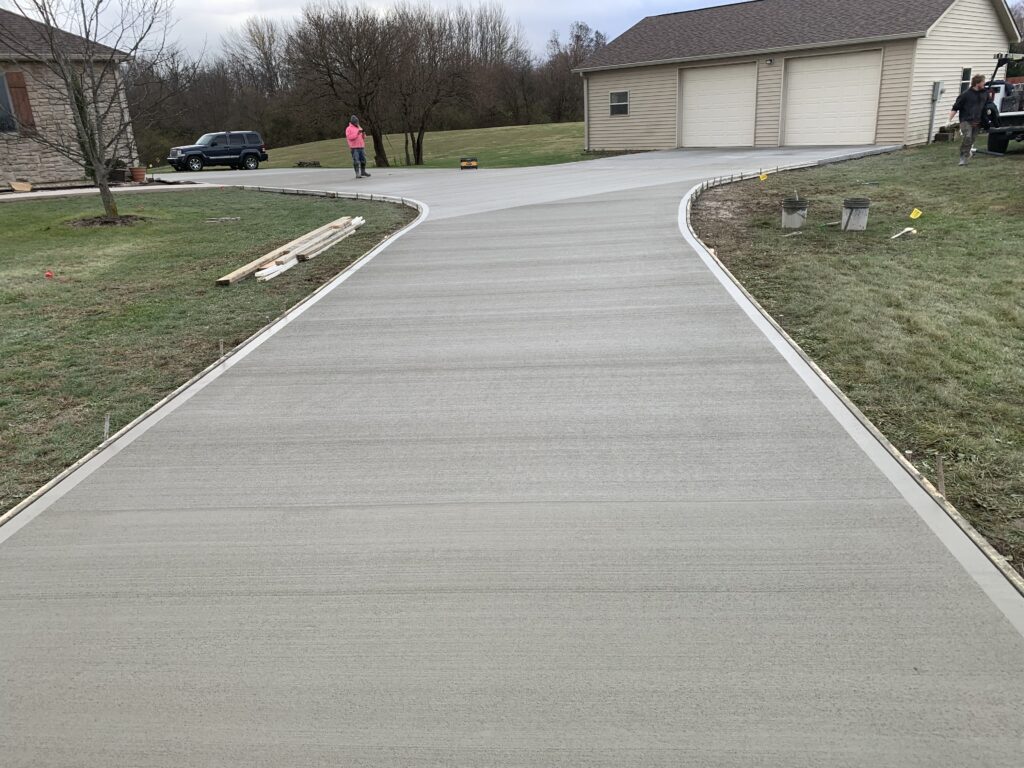
Concrete vs. Asphalt Maintenance: What Will Your Driveway Need Over Time?
Another major difference between concrete and asphalt is the amount of routine maintenance each surface typically requires.
Asphalt generally benefits from periodic sealcoating, crack repairs, and other maintenance as the surface ages. The frequency depends on the driveway’s condition, local weather, traffic, and the products used.
Concrete usually requires less routine maintenance, although it still needs attention.
Homeowners should keep concrete surfaces clean, address developing cracks when appropriate, and avoid practices that could contribute to premature deterioration. Depending on the finish and exposure, sealing may also be recommended.
Winter maintenance deserves particular attention.
Deicing chemicals can damage concrete surfaces, especially when the concrete is relatively new or already experiencing deterioration. Homeowners should follow their contractor’s recommendations for snow removal and winter care.
Concrete and asphalt can both be damaged by neglected drainage, excessive loads, and underlying ground movement.
For homeowners who prefer a driveway that doesn’t require frequent surface treatments, concrete generally has the advantage.
Does a Concrete Driveway Look Better Than Asphalt?
Appearance may not be the most technical consideration, but it certainly matters when the driveway is one of the first things people see when approaching your home.
Asphalt provides a traditional dark surface that works well with many properties. Its appearance is relatively uniform, and homeowners who prefer that look may find it appealing.
Concrete offers considerably more flexibility in design.
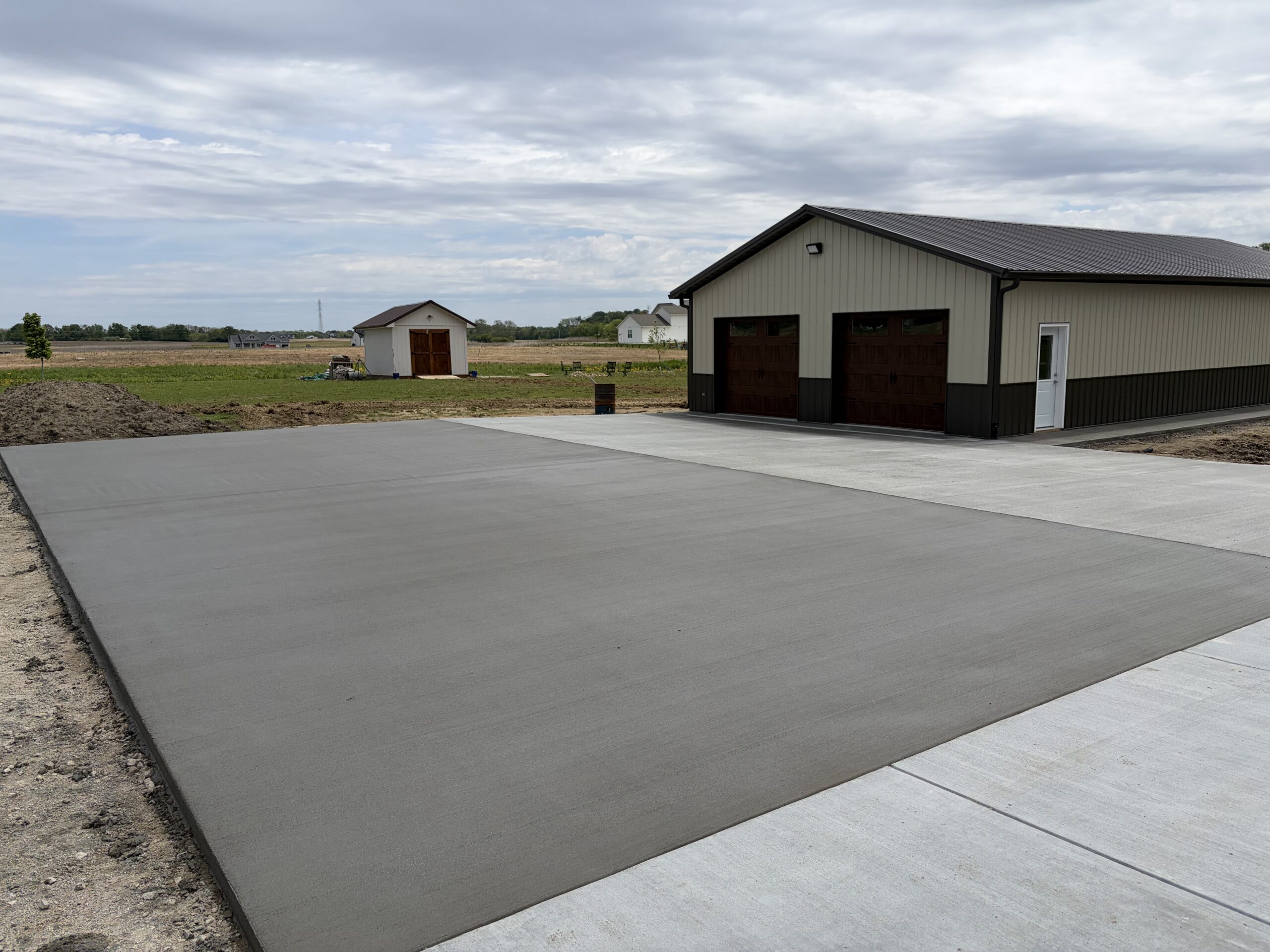
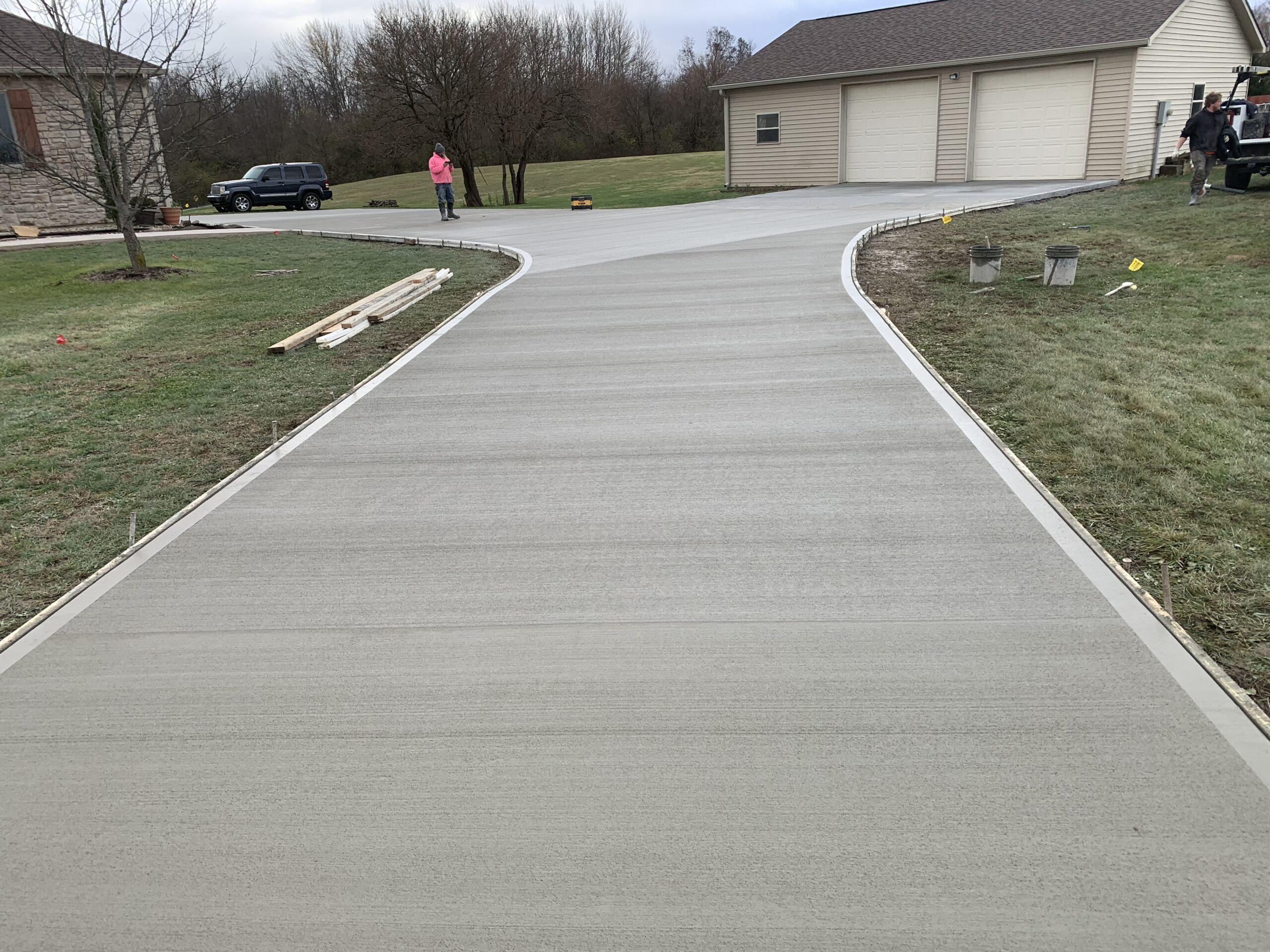
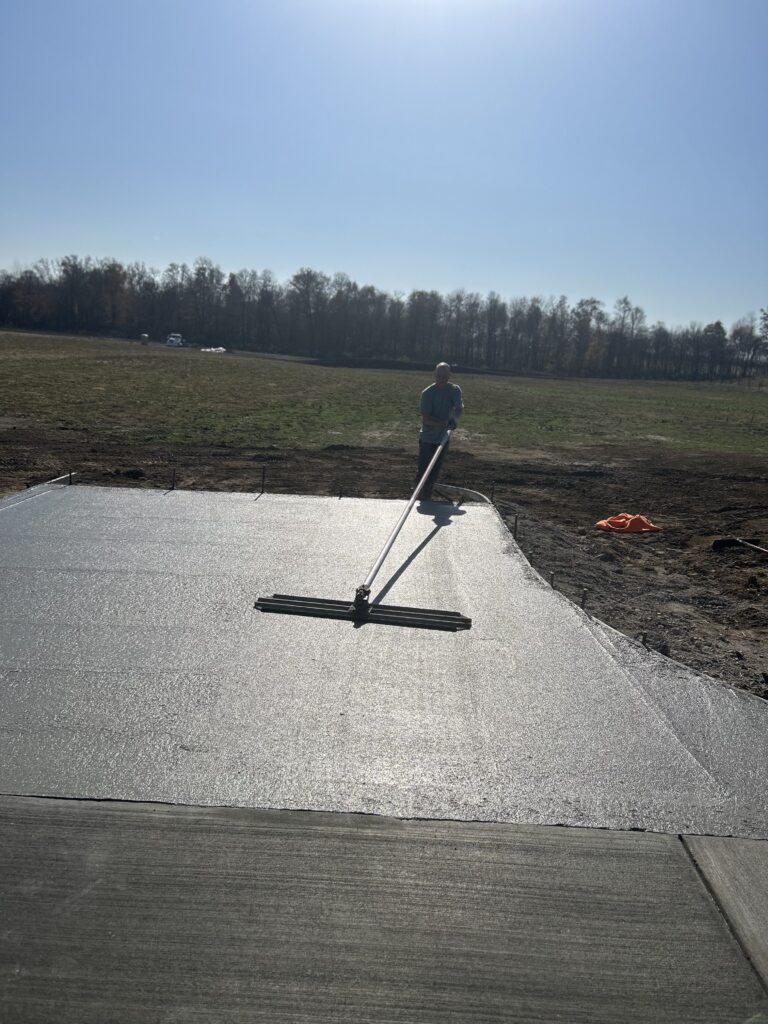
A standard broom-finished concrete driveway provides a clean, finished appearance that complements many homes. Decorative options, including stamped concrete and other specialty finishes, can create a more customized look.
Concrete can also be incorporated into a larger property improvement project.
For example, a homeowner replacing an old driveway might also consider widening the parking area, improving the sidewalk leading to the front door, or creating a more consistent appearance between the driveway and nearby walkways.
These details are worth discussing before installation begins.
Our residential concrete and hardscape services allow homeowners to explore driveway, sidewalk, patio, and decorative concrete options that fit the property.
A new driveway should do its job, but there’s nothing wrong with wanting it to look good, too.
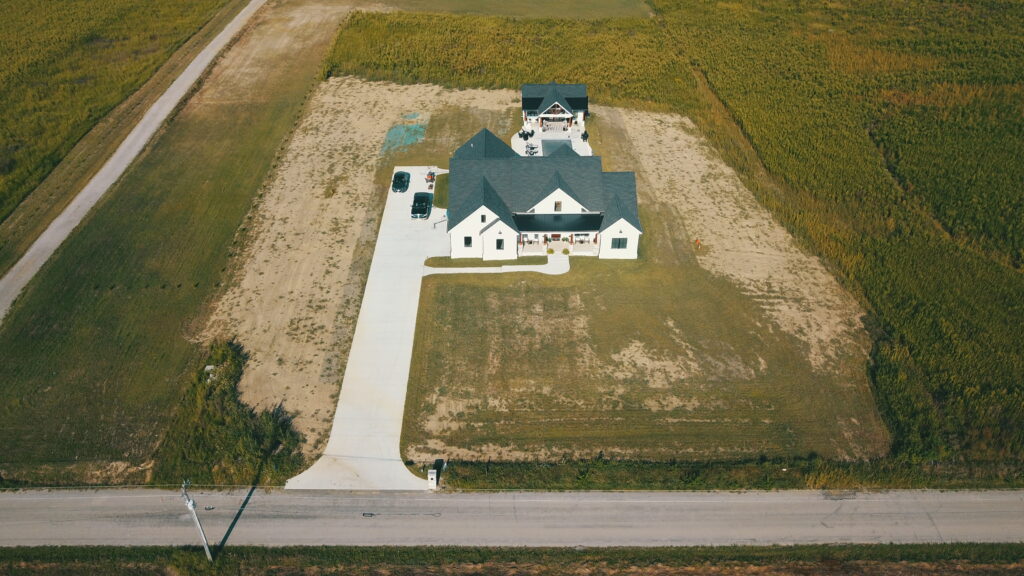
The Part of Driveway Installation You Don't See Can Make the Biggest Difference
Here’s something we wish more homeowners understood when comparing driveway contractors: the finished surface is only part of what you’re paying for.
Whether you’re installing concrete or asphalt, the driveway needs a stable foundation underneath it.
If the existing ground is unsuitable, the base isn’t properly prepared, or drainage problems aren’t addressed, the finished driveway can experience settlement, cracking, and other problems regardless of which material you choose.
Why Excavation and Base Preparation Matter
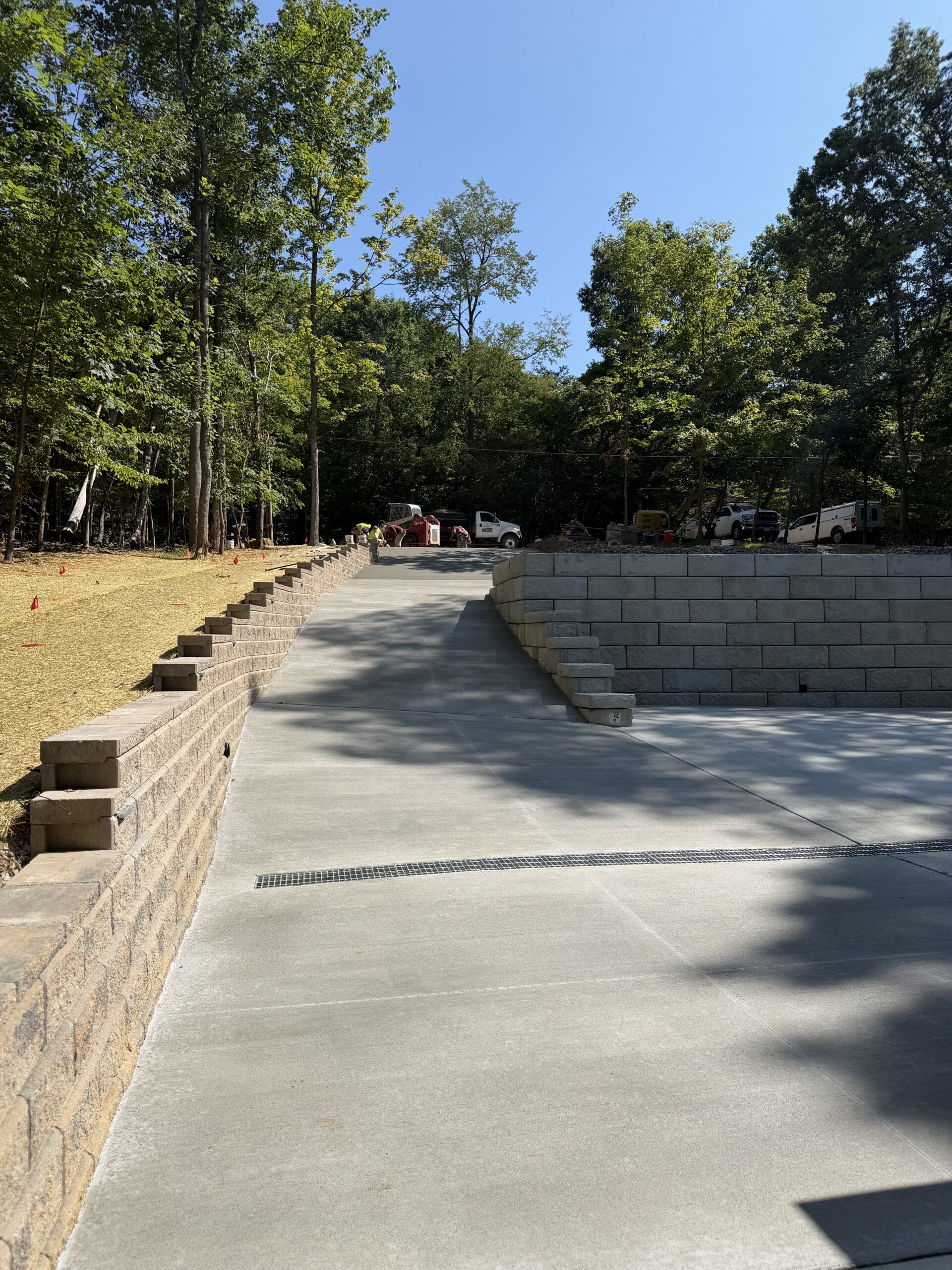
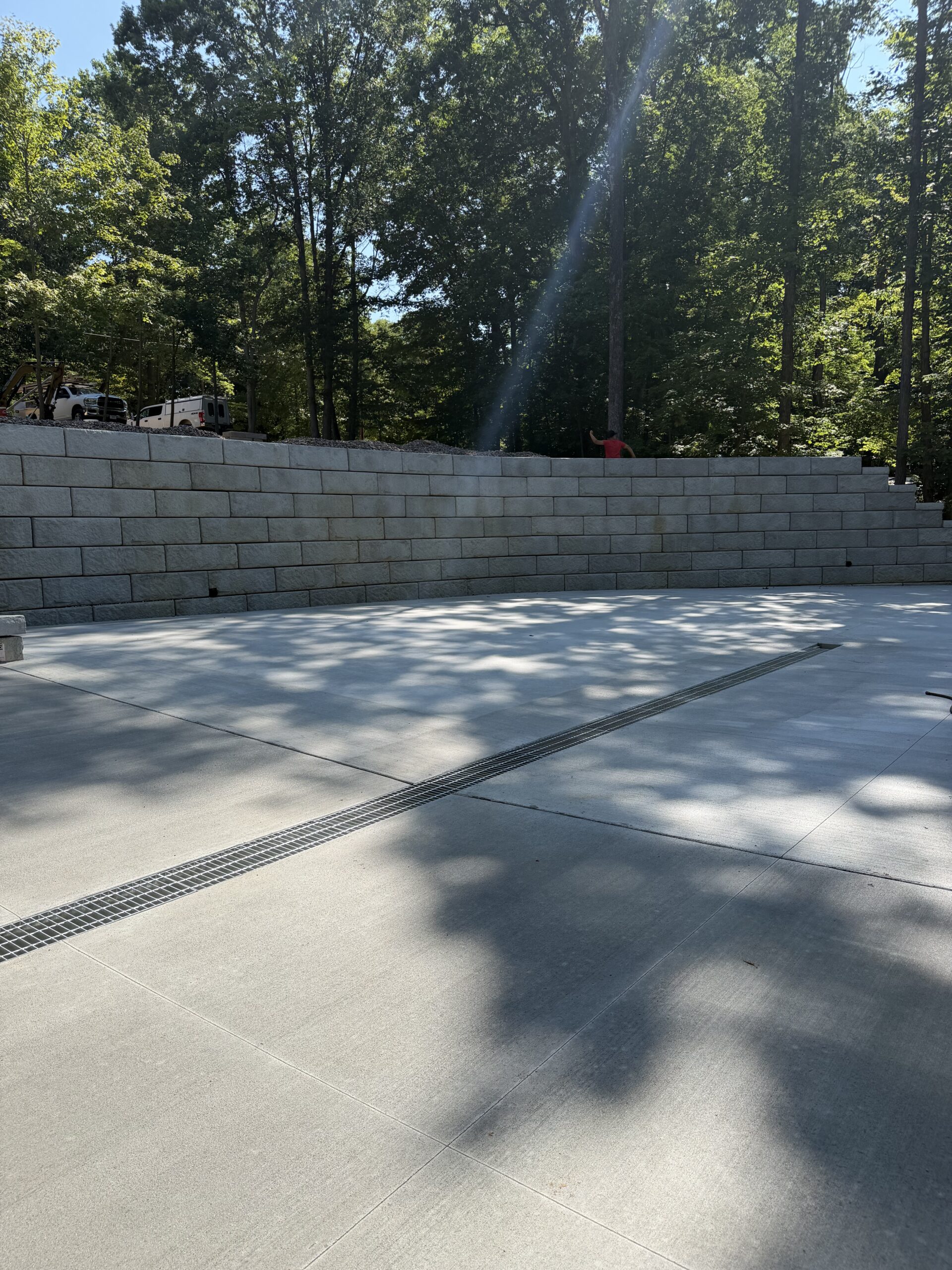
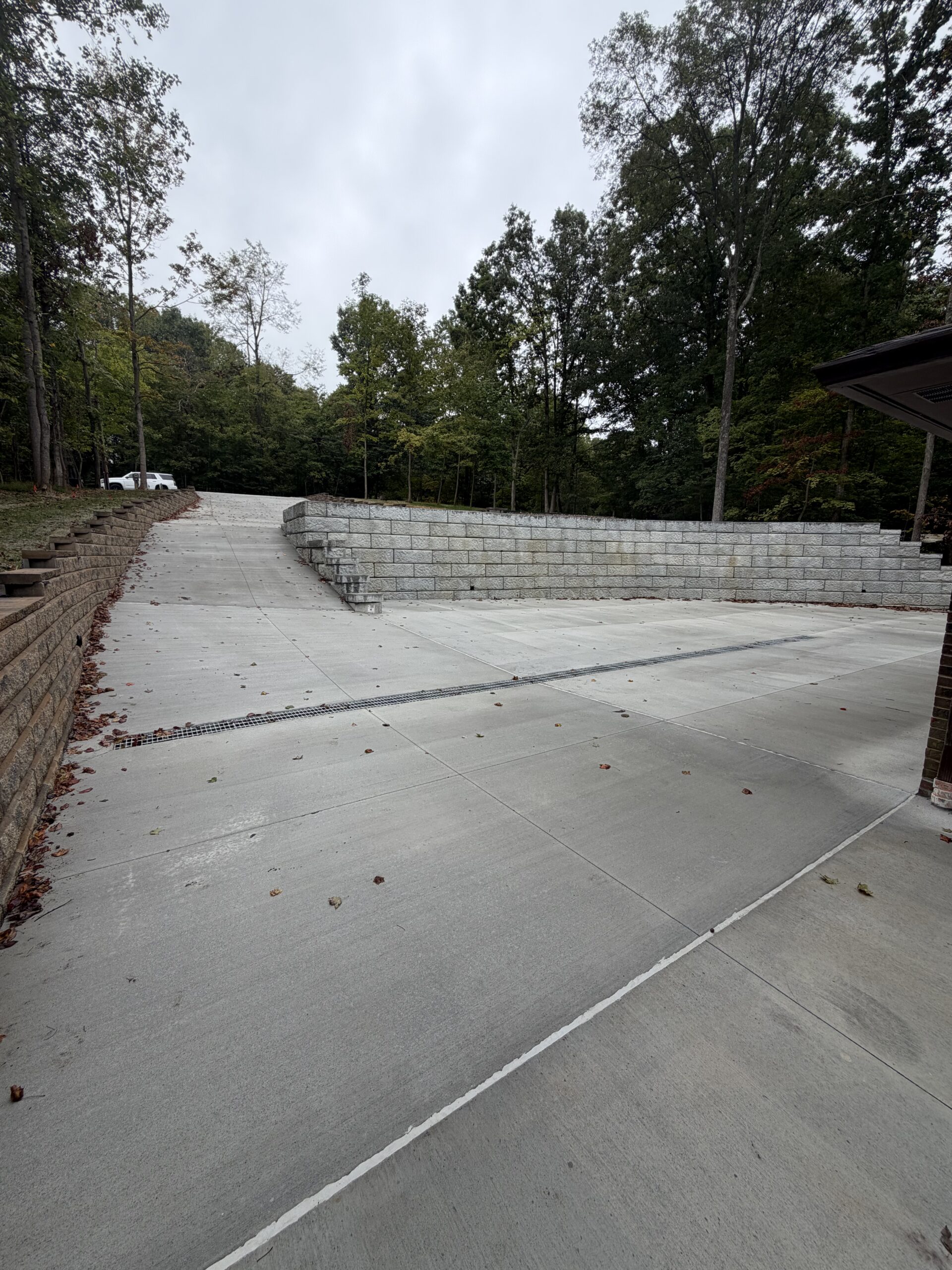
When replacing an existing driveway, the work may begin with demolition and removal of the old surface.
From there, the site may require excavation, grading, and preparation of the underlying material before installation can begin.
The amount of excavation depends on the existing conditions, the intended driveway design, and the materials already present.
For example, a driveway with significant settlement may need more attention to the underlying ground than a driveway being replaced primarily because of surface wear.
Likewise, a new driveway on an undeveloped property may require establishing elevations, preparing access, and creating a stable base before any concrete can be installed.
These aren’t details that should be overlooked just because the finished driveway will cover them.
One Crew From Excavation Through Final Grading
One of the advantages of working with Anhalt Concrete is that our crew handles more than the concrete itself.
We can take care of the excavation, site preparation, concrete installation, and final grading involved in the project.
That means homeowners don’t have to find one contractor to remove the existing driveway, another to prepare the site, and someone else to install the concrete.
Our crew understands what the finished concrete requires because we’re involved in preparing the ground underneath it.
This also helps keep communication straightforward throughout the project. Instead of coordinating several separate contractors, you’re working with one team that understands the job from start to finish.
For properties with drainage concerns, uneven terrain, or more involved excavation requirements, having those capabilities under one contractor can be especially beneficial.
Our concrete and site restoration services are designed to address the entire project, not just the part you see when the work is finished.
So, Is Concrete or Asphalt the Better Choice for Your Property?
There’s no single driveway material that’s right for every property. Asphalt can be a practical option when keeping the initial installation cost down is the biggest priority. However, if you’re looking for a driveway that offers long-term durability, less routine maintenance, and more flexibility in appearance, concrete is worth the additional investment.
For homeowners planning to stay in their homes for years to come, that long-term value is especially important. A properly installed concrete driveway can provide decades of dependable use without the frequent surface maintenance typically associated with asphalt.
Of course, the material is only part of the equation. The quality of the excavation, base preparation, drainage, and installation will have a major impact on how well your driveway performs over time. That’s why our crew at Anhalt Concrete handles the process from excavation through final grading, making sure the work beneath the surface gets just as much attention as the finished concrete.
Frequently Asked Questions About Concrete and Asphalt Driveways
Is concrete or asphalt better for driveways in Indiana?
Both materials can perform well in Indiana when properly installed and maintained. Concrete generally offers a longer expected lifespan, less routine maintenance, and more finishing options, while asphalt typically has a lower upfront installation cost. The best choice depends on your budget, property conditions, and long-term expectations.
Is a concrete driveway worth the extra money?
For many homeowners, a concrete driveway is worth the higher initial cost because of its potential longevity, relatively low routine maintenance requirements, and appearance. However, the value depends on installation quality, how long you plan to own the property, and the cost of maintaining or replacing alternative materials.
Does concrete crack more easily than asphalt?
Concrete is rigid, while asphalt is more flexible, so the two materials respond differently to temperature changes and ground movement. Both can develop cracks. Proper excavation, base preparation, drainage, joint placement, and installation practices help reduce the likelihood of premature concrete cracking.
How long should a concrete driveway last in Indiana?
A properly installed and maintained concrete driveway can often last 30 years or longer, although actual service life varies. Soil conditions, drainage, installation quality, vehicle loads, weather exposure, and maintenance all affect how well the driveway performs over time.
Do I need excavation before installing a new concrete driveway?
Many driveway installations require some level of excavation or site preparation. Replacing an existing driveway may involve removing the old material and evaluating the base underneath. New installations may require excavation, grading, and preparation of a stable foundation. The specific work depends on the property and project requirements.
Can one contractor handle driveway excavation and concrete installation?
Yes. Anhalt Concrete handles excavation, site preparation, concrete installation, and final grading for its concrete projects. Working with one crew can simplify scheduling and communication while helping ensure the site preparation and finished concrete are planned together.
Thinking About Replacing Your Driveway in 2027? Here's Where to Start
If your existing driveway has reached the point where repairs no longer make sense, it’s worth taking some time to evaluate your options before committing to a replacement.
Start by considering how the driveway needs to function.
Do you need additional parking space? Would widening the driveway improve access to your garage? Are there drainage problems that need to be addressed? Is the existing surface deteriorating because of age, or could something underneath be contributing to the problem?
These questions help determine what the project actually requires.
For homeowners considering concrete, the next step is to have a contractor evaluate the property and provide an estimate based on the work involved.
At Anhalt Concrete, we serve homeowners throughout Central Indiana, including Trafalgar, Franklin, Greenwood, Indianapolis, and surrounding communities.
If you’re hoping to replace your driveway in spring 2027, fall and winter are good times to start discussing your plans.
We’ve also put together a guide on planning spring concrete projects that covers estimating, scheduling, and what to expect before construction begins.