Can You Pour Concrete in the Fall? What Indiana Homeowners Should Know
Fall can be an excellent time to complete a concrete project in Indiana, but changing temperatures make proper planning, site preparation, placement, and curing especially important. Here’s what homeowners should know before scheduling a fall concrete project.
Yes, You Can Pour Concrete in the Fall in Indiana
If you have been considering a new concrete driveway, patio, sidewalk, slab, or another outdoor concrete project, you may assume the arrival of fall means you have missed your opportunity for the year.
Fortunately, that is not necessarily the case.
Concrete can absolutely be poured in the fall in Indiana. In fact, moderate fall temperatures can provide favorable conditions for concrete installation. The bigger consideration is not the season printed on the calendar. It is the actual weather conditions before, during, and after the concrete is placed.
Indiana homeowners know how unpredictable fall weather can be. One afternoon may feel like summer, while the following week brings chilly mornings and the first frost of the season. Those temperature swings mean an experienced concrete contractor needs to pay attention to the forecast, ground conditions, concrete mix, site preparation, and curing process.
When those factors are managed correctly, fall can still be a great opportunity to complete your concrete project before winter arrives.
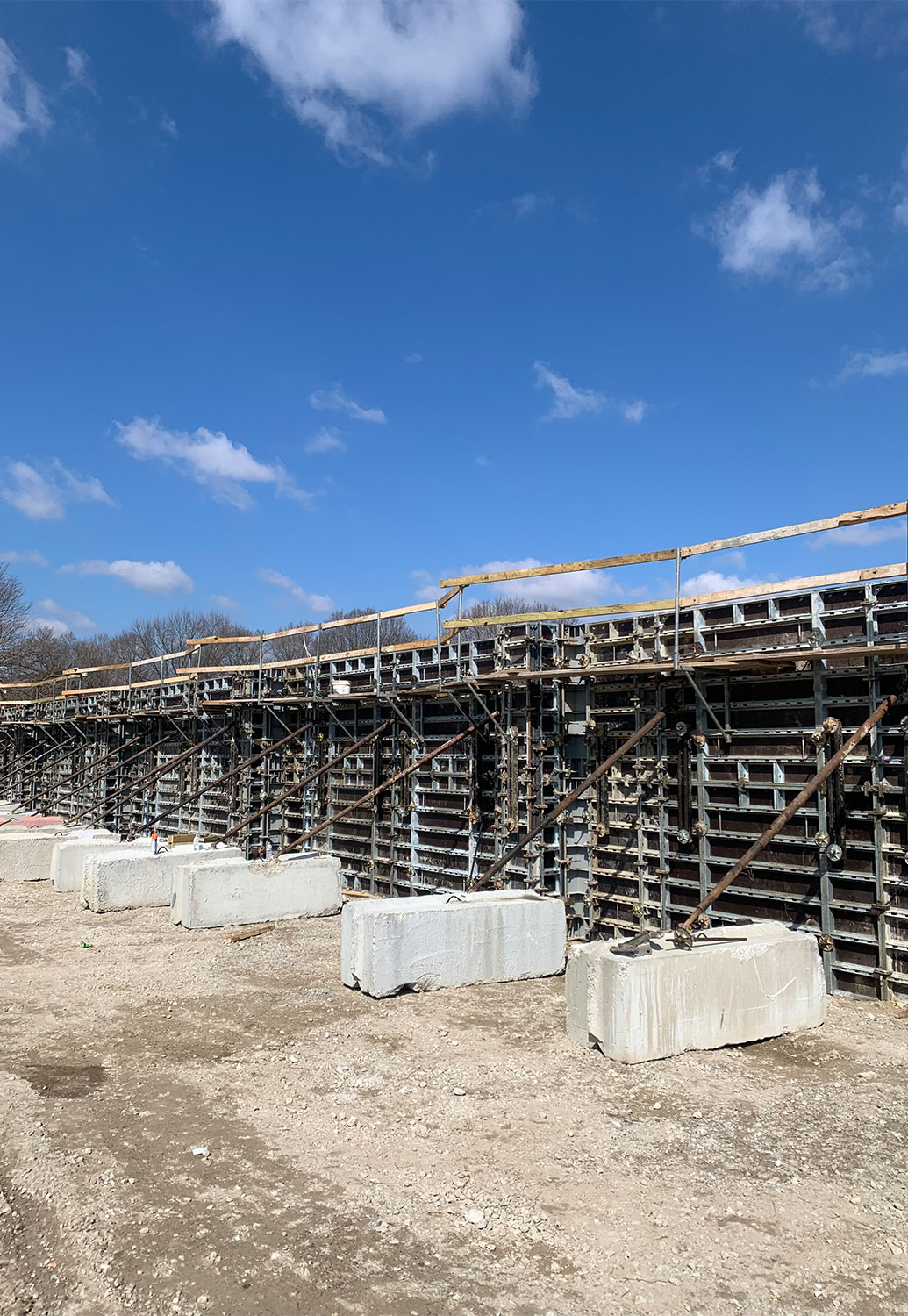
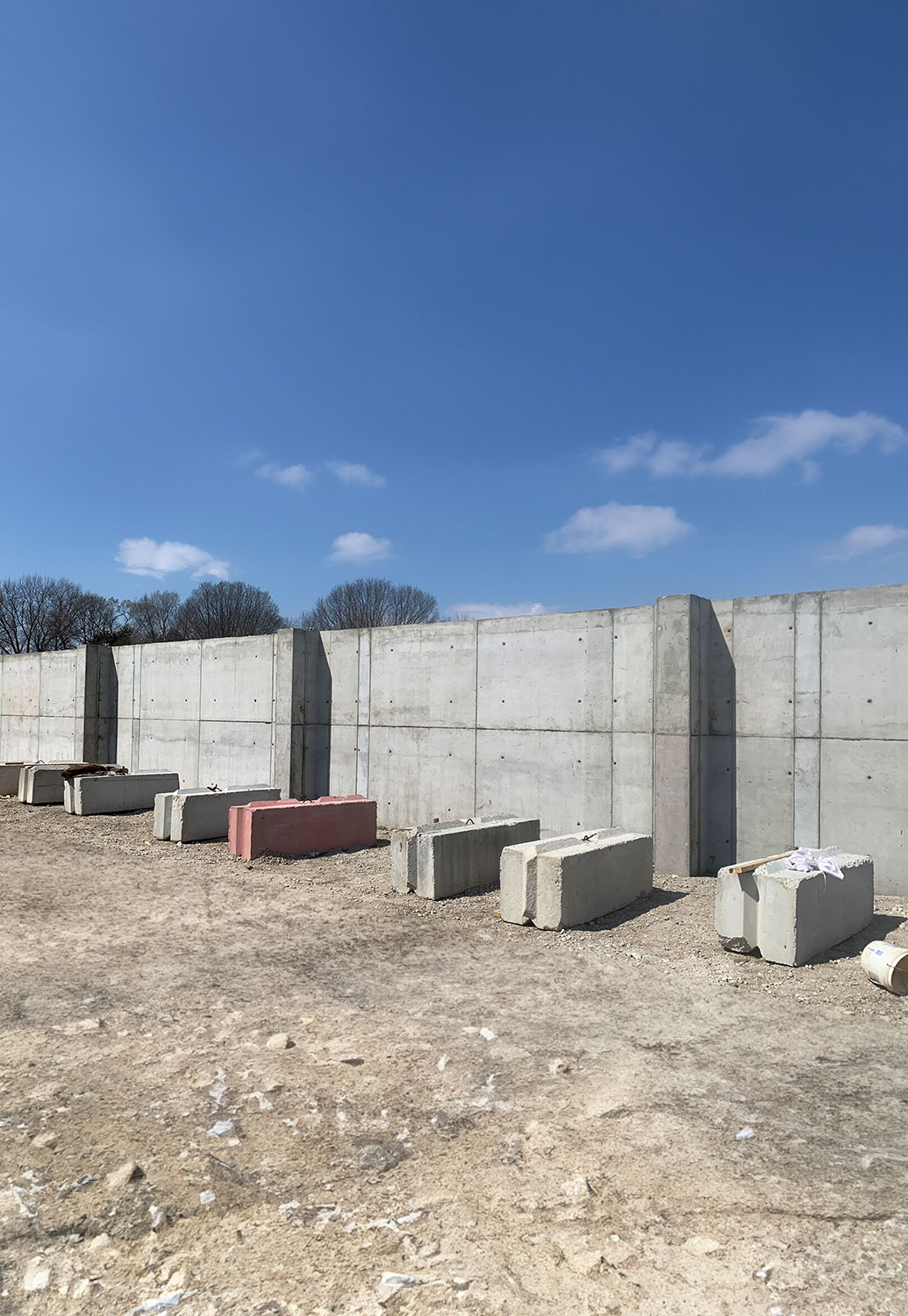
Proudly Serving Indianapolis Since 2021!
What Is the Best Temperature for Pouring Concrete?
Concrete does not simply “dry” after it is poured. It gains strength through a chemical reaction between cement and water called hydration.
Temperature affects how quickly that process occurs.
When temperatures are moderate, concrete can develop strength under more predictable conditions. When temperatures become colder, the hydration process slows. If fresh concrete is exposed to freezing temperatures before it has developed adequate strength, the final product can potentially be damaged.
The American Concrete Institute considers additional cold-weather precautions necessary when temperatures fall, or are expected to fall, below approximately 40°F during the period when new concrete needs protection.
That does not mean concrete suddenly cannot be poured once the thermometer reaches 39°F.
It means the contractor needs to evaluate the conditions and determine whether additional cold-weather concrete practices are necessary.
Why Cooler Fall Temperatures Can Actually Be Helpful
Extremely hot summer weather presents challenges of its own.
When concrete is installed during very hot, sunny, or windy conditions, moisture can evaporate quickly from the surface. The concrete may also set more rapidly, leaving crews with less time to properly place and finish it.
Moderate fall temperatures can eliminate some of those concerns.
A mild Indiana fall day may provide comfortable working conditions and allow the concrete to gain strength without the intense heat associated with peak summer.
That makes early and moderate fall a potentially excellent time for concrete installation.
The key word, however, is moderate.
As Indiana moves deeper into fall and nighttime temperatures begin approaching freezing, contractors need to take additional precautions.
How Cold Is Too Cold to Pour Concrete in Indiana?
There is no single temperature that answers this question for every project.
Instead, a concrete contractor should consider several factors, including:
- The daytime temperature
- The overnight low
- Ground temperature and condition
- Wind and weather exposure
- The type and size of the concrete project
- The concrete mix being used
- How the concrete will be protected after placement
- How long colder temperatures are expected to last
One of the most important things to understand is that the temperature at the exact moment the concrete truck arrives is only part of the equation.
For example, a sunny 55-degree afternoon may sound perfect for pouring concrete. But if temperatures are expected to fall below freezing that night, the contractor needs to account for what will happen to that fresh concrete after the crew leaves.
That is why experienced concrete contractors monitor the entire weather window surrounding a pour rather than looking only at the daytime high.
What Happens If Fresh Concrete Freezes?
Water is an essential part of the concrete mixture and the hydration process.
If concrete freezes before it has developed sufficient early strength, the formation of ice can interfere with that process and potentially damage the concrete.
Cold temperatures also slow strength development, which means concrete placed in colder conditions may need additional time and protection.
This is one reason proper curing is so important during late-fall concrete installation in Indiana.
A professional contractor may adjust the timing of the pour, use an appropriate concrete mixture, provide insulation or other protection, or postpone the project if conditions are not suitable.
Sometimes the best decision is to proceed with the proper precautions.
Other times, the best decision is to wait.
Knowing the difference is part of installing concrete correctly.
Why Ground Conditions Matter Just as Much as Air Temperature
Homeowners often focus on the weather forecast when deciding whether it is too cold to pour concrete, but the condition of the ground underneath the project is equally important.
Concrete should not simply be placed over unstable, poorly prepared, or frozen ground.
The finished concrete is only as reliable as the foundation supporting it.
Never Ignore a Frozen Subgrade
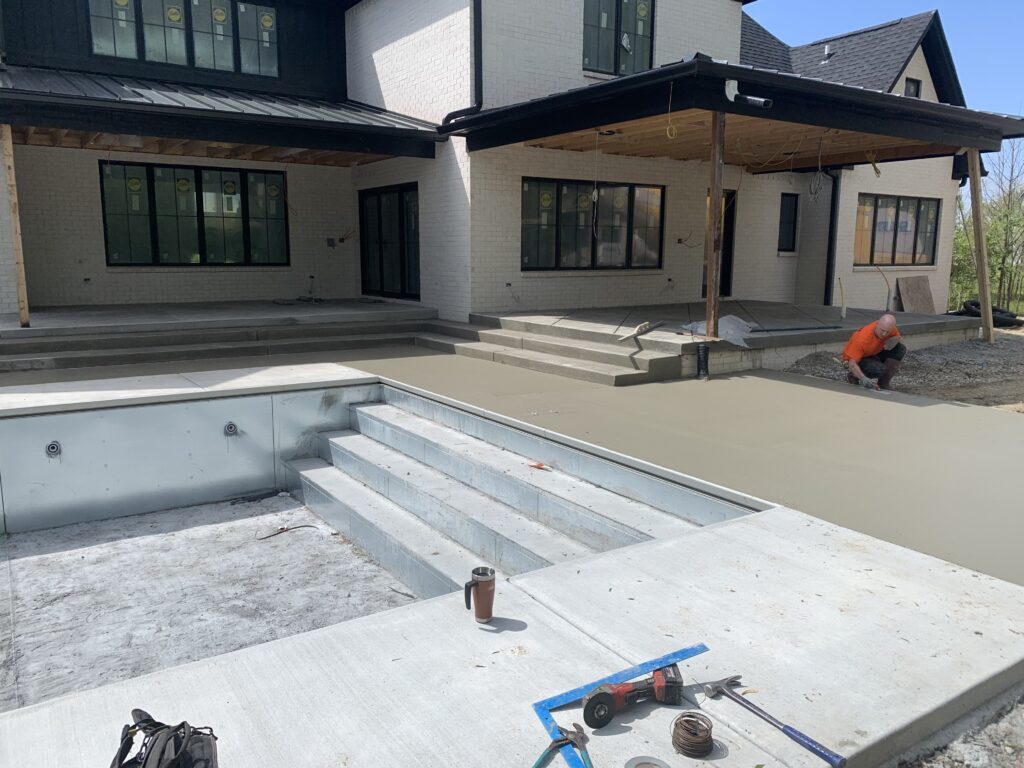
Pouring concrete over frozen ground can create significant problems.
Frozen soil can expand. When that soil eventually thaws, it can move or settle. A concrete slab placed on top of those changing conditions may no longer have consistent support underneath it.
That can contribute to settlement, movement, and cracking.
For a concrete driveway, patio, sidewalk, or other slab, proper excavation and base preparation should happen before concrete placement.
This is especially important in Indiana, where seasonal temperature changes and repeated freezing and thawing are simply part of our climate.
Indiana's Freeze-Thaw Cycles Make Proper Concrete Installation Important
Anyone who has lived in Central Indiana for a few winters knows our weather rarely stays consistently cold.
Temperatures may fall below freezing at night and rise above freezing during the day. A stretch of mild weather can be followed by snow and ice, only for warmer temperatures to return days later.
Those repeated freeze-thaw cycles can be hard on exterior concrete over time, particularly when water is able to enter vulnerable areas.
That makes the quality of the initial installation incredibly important.
A properly planned concrete project considers more than how the finished surface will look. Site preparation, drainage, grading, concrete specifications, joints, finishing, and curing all play a role in how well the concrete performs over the years ahead.
Drainage Matters Before the Concrete Is Ever Poured
Water needs somewhere to go.
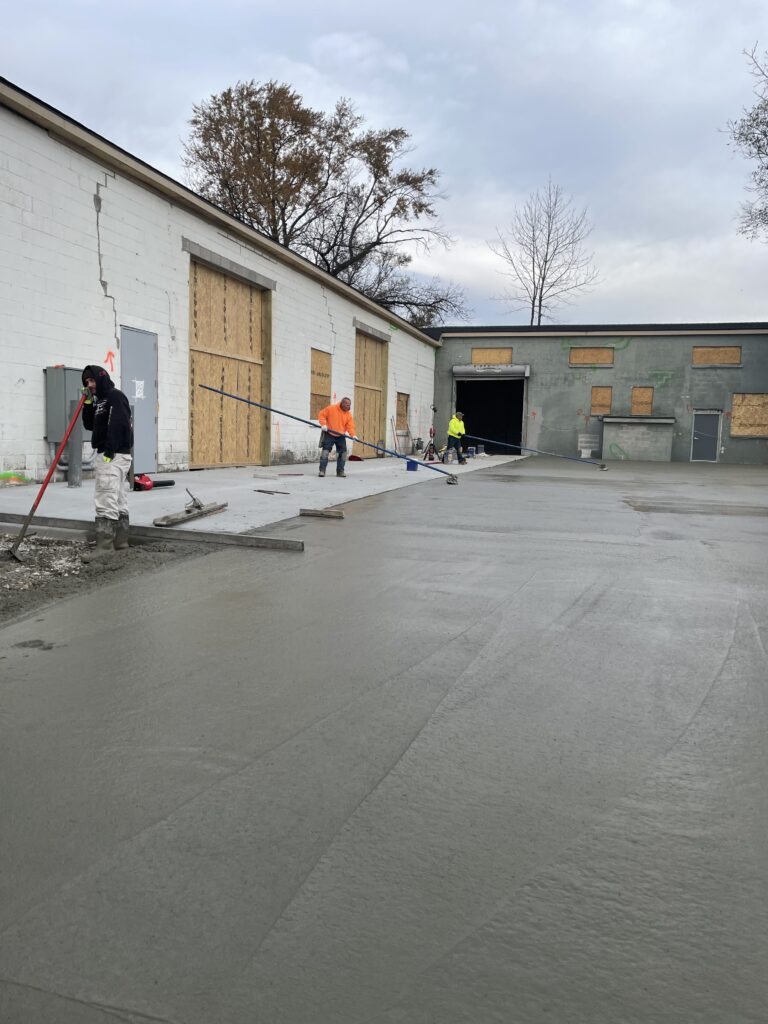
If a driveway, patio, or slab is improperly graded, water can collect where it should not. That may create problems around the concrete itself and potentially direct water toward garages, foundations, landscaping, or other areas of the property.
This becomes even more important on complicated properties.
A steep driveway, sloped lot, waterfront property, or site with significant drainage considerations requires more planning than a perfectly flat, open site.
Before concrete is poured, the contractor should understand how water currently moves across the property and how the finished project may change that movement.
The goal is not simply to install concrete.
The goal is to install concrete that works with the property around it.
What Concrete Projects Can Be Completed in the Fall?
Many common residential and commercial concrete projects can be completed during the fall when weather and site conditions are appropriate.
These may include:
Concrete Driveways
Fall can be a good time to replace an aging or damaged driveway or install a new concrete driveway in Central Indiana.
Proper base preparation, grading, drainage, concrete placement, and curing are particularly important for a surface that will regularly support vehicles and remain exposed to Indiana weather throughout the year.
Concrete Patios
A fall concrete patio installation can also prepare your outdoor space for the following spring and summer.
Instead of beginning your project when warm weather returns and contractors become increasingly busy, completing the concrete portion in the fall may allow your outdoor living area to be ready when you want to use it.
Sidewalks and Walkways
Damaged, uneven, or deteriorating walkways can become even more frustrating once winter weather arrives.
When conditions allow, fall may be an opportunity to replace sidewalks and concrete walkways before snow and ice become part of the equation.
Concrete Slabs
Concrete slabs for outdoor structures, equipment, additions, or other uses may also be installed during fall weather when the site and temperatures are appropriate.
Every project is different, however, so the right installation window should be determined based on the specific property and application.
Why Site Preparation Matters for Fall Concrete Projects
The visible concrete is only one part of a successful project.
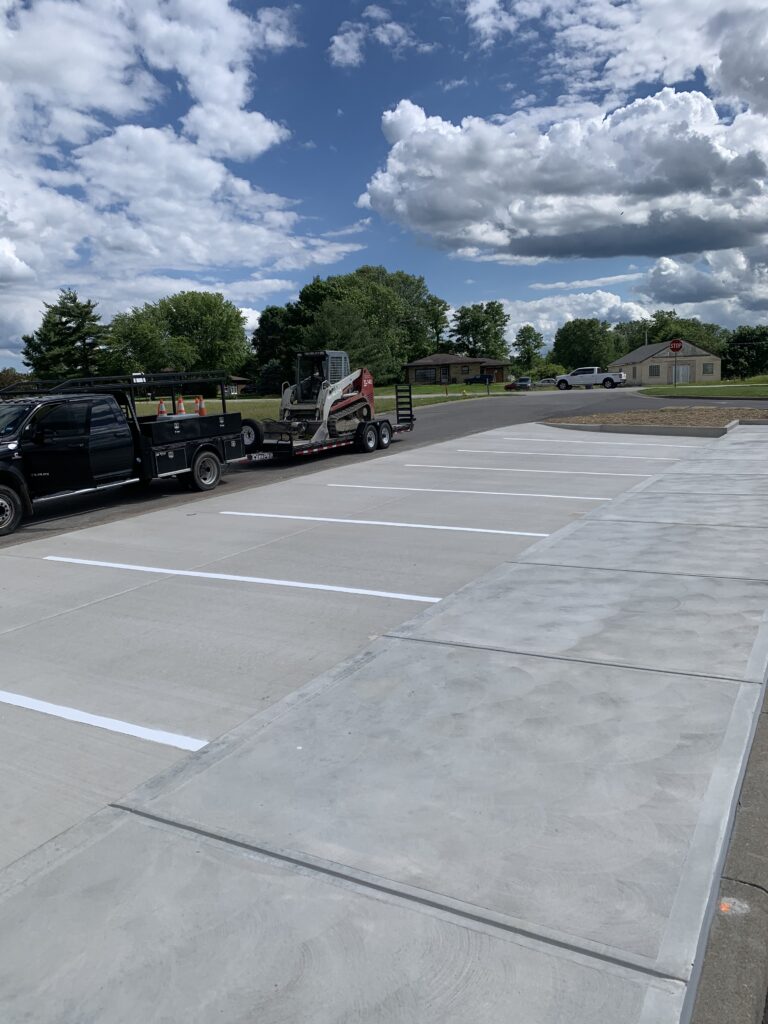
Before the concrete truck arrives, there may be existing material to remove, soil to excavate, elevations to establish, a base to prepare and compact, drainage to consider, and forms to install.
Skipping or rushing those steps can create problems that no beautiful concrete finish can solve.
This becomes especially important on properties with challenging terrain.
Sloped and Difficult Sites Require Additional Planning
Not every concrete project happens on a flat, easily accessible lot.
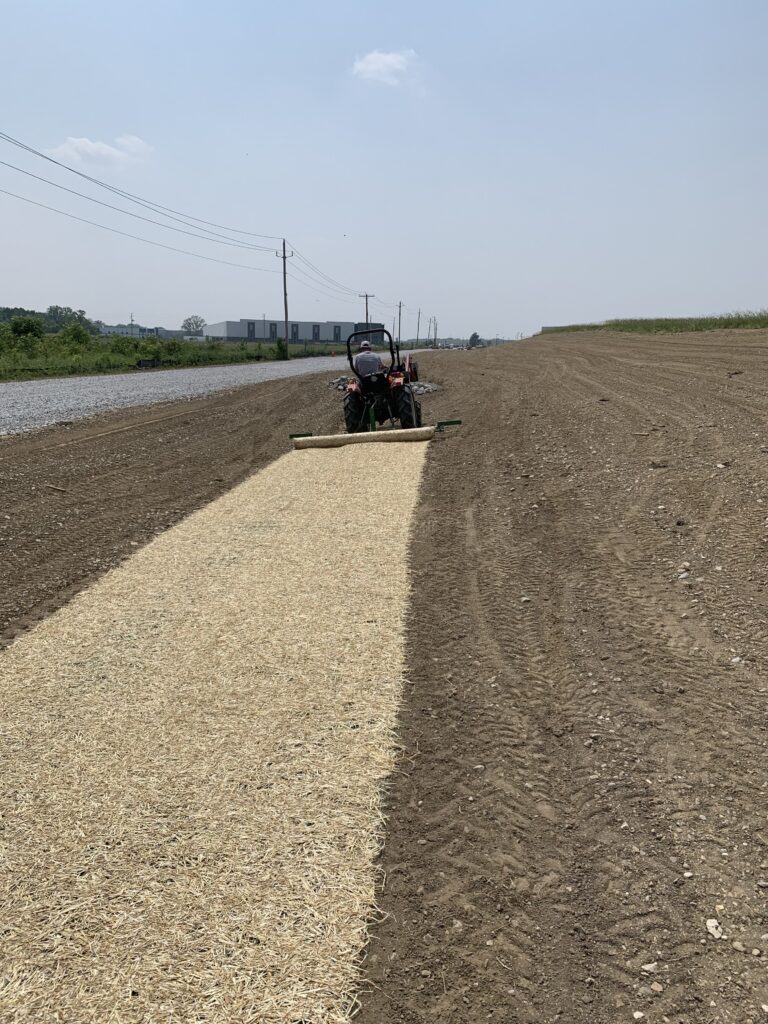
Central Indiana has properties with steep slopes, wooded terrain, waterfront areas, drainage challenges, limited equipment access, existing hardscaping, and other site conditions that can make concrete installation more complicated.
Those projects require a contractor who can look at the entire site.
How will equipment access the area?
Where will water move once the project is complete?
Does the slope require additional excavation or grading?
How will the base be prepared?
How does the new concrete connect with existing structures or hardscaping?
These questions should be addressed before the concrete is placed, not after a problem develops.
Fall Concrete FAQs: Anhalt Answers Common Homeowner Questions
Planning a concrete project this fall? Here are answers to some of the questions Indiana homeowners commonly have about scheduling, weather, site preparation, and caring for new concrete as temperatures begin to change.
How cold is too cold to pour concrete?
There isn’t one temperature that determines whether a concrete project can move forward. We look at the full weather window, including daytime temperatures, overnight lows, ground conditions, and the forecast for the days following the pour. As temperatures get colder, additional precautions may be needed to help the concrete develop strength properly.
How do you prepare the site before pouring concrete?
Proper site preparation is one of the most important parts of a successful concrete project. Depending on the property and project, this may include excavation, preparing and compacting the base, establishing proper elevations, addressing drainage, grading, and preparing forms. We evaluate the site before the pour so the concrete has a properly prepared foundation underneath it.
What happens if the weather forecast changes before my concrete pour?
Indiana weather can change quickly, especially during the fall. We monitor conditions leading up to a scheduled pour and adjust when necessary. If rain, freezing temperatures, or other conditions could affect the quality of the finished project, we may change the timing rather than risk pouring under unsuitable conditions.
How do you protect new concrete if temperatures drop?
When colder temperatures are expected, fresh concrete may require additional protection while it develops early strength. The specific approach depends on the project and weather conditions and may include cold-weather concrete practices such as insulating blankets. Our goal is to create the proper conditions for the concrete after placement, not simply get it poured before temperatures fall.
How soon can I use my new concrete driveway, patio, or sidewalk?
That depends on the project, weather, and how the concrete is curing. Cooler fall temperatures can slow early strength development, so we provide guidance based on the actual conditions and application. Even when concrete looks dry on the surface, that does not necessarily mean it is ready for vehicles, heavy loads, or normal use.
Plan Your Fall Concrete Project With Anhalt Concrete and Site Restoration
So, can you pour concrete in the fall in Indiana?
Absolutely, when the conditions are right and the project is planned properly.
Fall can provide an excellent opportunity to complete a new concrete driveway, patio, sidewalk, slab, or other concrete project before winter. The key is working with a contractor who understands that successful concrete installation involves more than what happens when the concrete truck arrives.
At Anhalt Concrete and Site Restoration, we provide residential and commercial concrete services throughout Central Indiana with careful attention to the entire project, from site preparation and grading to concrete placement and the finished result.
We are also equipped to evaluate projects where the site itself creates additional challenges, including slopes, difficult access, drainage considerations, hardscaping, and other complicated property conditions.
If you are considering a concrete project this fall, you do not have to guess whether you have waited too long.